
When people think about caregiving, they often imagine the big, heavy moments: medical appointments, medications, emergencies, end-of-life decisions. What doesn’t get talked about as much are the smaller, quieter skills we develop along the way—the ones that don’t come with instructions but shape us just as deeply.
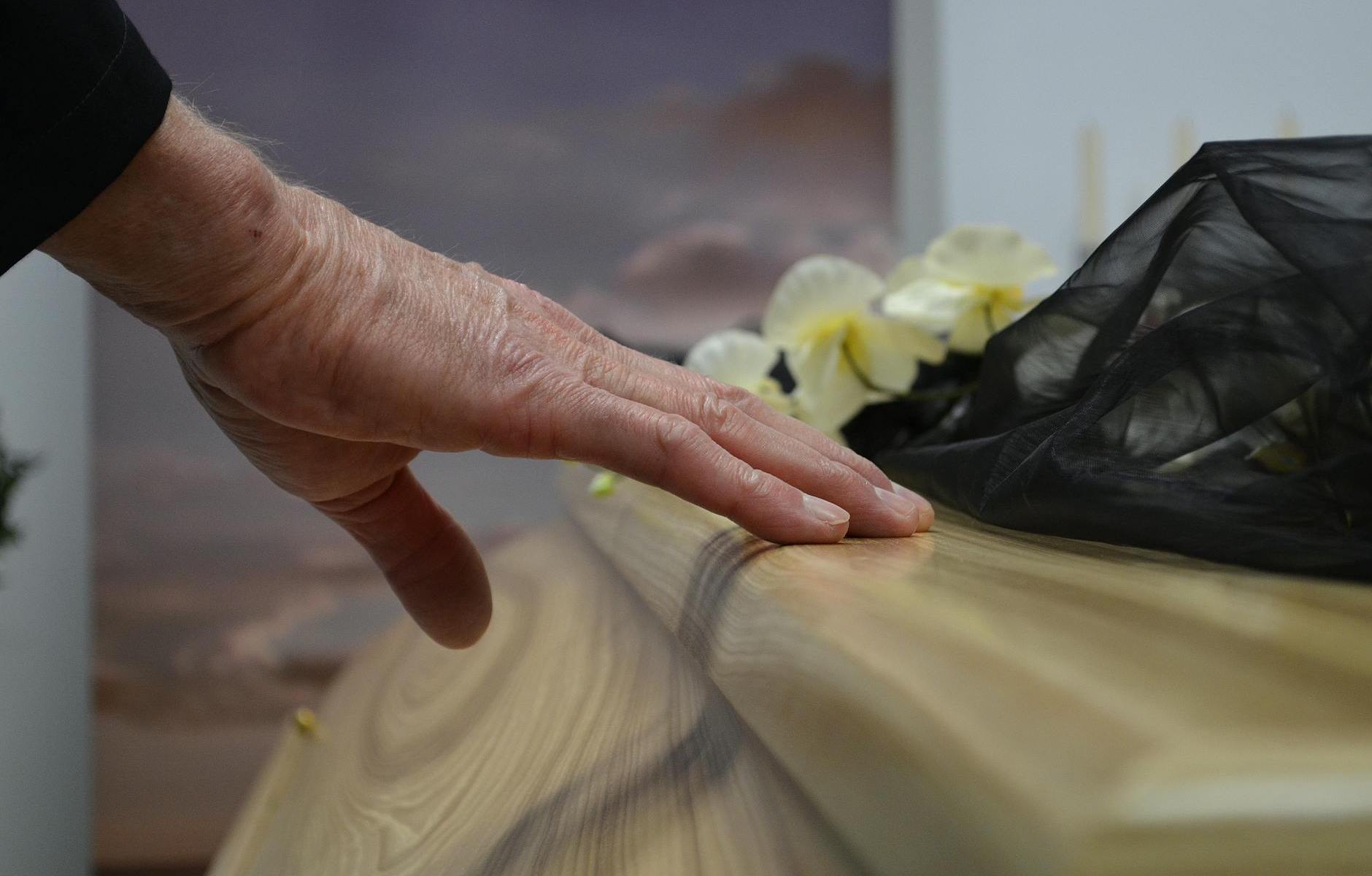
One of those skills is learning how to say goodbye.
Not the final goodbye, though that one looms in the background of many caregiving journeys. I mean the dozens of goodbyes that happen long before that. The moments where something shifts, and you realize—sometimes only in hindsight—that a door has closed.
Caregiving teaches us how to say goodbye again and again.
Saying Goodbye to Who They Were
Often, the first goodbye is the hardest to name. It’s the realization that your loved one is no longer the person you grew up with. Maybe it shows up as forgetfulness that can’t be brushed off anymore. Or a sudden role reversal, when the person who once knew everything now asks you what day it is.
This goodbye doesn’t happen all at once. It comes in pieces. (Hence the phrase, “The Long Goodbye”.) You say goodbye to long conversations. To shared memories that now only you seem to remember. To advice you once relied on. Each moment is small enough to ignore—but together, they reshape the relationship.
Caregivers learn to grieve this version of their loved one while still loving the person in front of them. That is a skill. A painful one. A necessary one.
Saying Goodbye to Independence

There’s another goodbye that comes when keys are taken away, when driving stops, when living alone is no longer safe. These transitions are often framed as practical decisions, but emotionally they are loaded.
You’re not just helping with logistics—you’re bearing witness to someone letting go of autonomy. And in many cases, you’re the one asking them to let go.
Caregivers learn how to sit with the discomfort of being both protector and perceived enemy. We learn how to say goodbye to the ease of “they’ll handle it” and accept the weight of “it’s on me now.”
Saying Goodbye to Your Old Self
Caregiving does not just change our parents—it changes us.
We say goodbye to spontaneity. To unplanned weekends. To the version of ourselves who could make decisions without checking a calendar full of responsibilities. We say goodbye to certain freedoms, and sometimes to parts of our identity that no longer fit.
This goodbye can bring guilt with it. Guilt for missing the life we had. Guilt for wanting time back. Guilt for resenting a role we didn’t ask for but stepped into anyway.
Caregivers slowly learn that acknowledging this loss doesn’t make us selfish—it makes us honest.
Saying Goodbye to the Illusion of Control

One of the quieter skills caregiving teaches us is letting go of the belief that if we just do enough, plan enough, love enough, we can fix everything.
We can’t.
We say goodbye to neat timelines, clear answers, and guarantees. A person’s health declines unevenly. Good days are followed by bad ones without explanation. Progress is rarely linear.
Over time, caregivers learn how to live in uncertainty. How to show up without certainty. How to stop asking “Why is this happening?” and start asking “What does today need?” That shift is its own kind of goodbye—and its own kind of growth.
Saying Goodbye in Small, Ordinary Ways
Some goodbyes are almost invisible.
- The last time a loved one cooks a holiday meal.
- The last time they remembered your birthday without prompting.
- The last time they call you just to check on you.
You often don’t know they’re “lasts” until later. Caregivers develop a sensitivity to these moments—not to cling to them, but to honor them. We hold them gently, without trying to freeze time.
Saying Goodbye Without Leaving
Perhaps the most complex goodbye caregivers learn is how to let go while also staying present. How to release expectations and mourn losses while continuing to care. How to love someone as they are, not as we wish they could be.
This is not resignation – it is an adaptation. It is emotional flexibility. It is resilience built one hard moment at a time.
What These Goodbyes Teach Us

Saying goodbye, again and again, teaches caregivers compassion—for our loved ones, for ourselves, and for others walking paths of loss.
It teaches us how to live more honestly, because denial becomes too heavy to carry.
It teaches us presence, because the future is uncertain. Goodbyes teach us humility, because nothing is guaranteed.
Caregiving doesn’t just ask us to care for someone else—it asks us to grow into someone who can hold love and loss at the same time.
Not to romanticize the difficulty of this journey but the skill of saying goodbye, once learned, stays with you. It softens you. It deepens you. It changes how you live.
“You endure what is unbearable, and you bear it. That is all.”
― Cassandra Clare
 Dad's Back